

What’s the difference between a tactical procurement team and a strategic one?
The frameworks they use.
I’ve seen teams spend months chasing the wrong suppliers.
Because they didn’t know where to focus.
I’ve seen negotiators leave money on the table.
Because they walked into meetings without leverage.
I’ve seen great procurement work get ignored.
Because nobody could explain the value.
The most influential procurement professionals don’t just work harder.
They think differently.
They use frameworks.
Want to:
Win stakeholder support?
Negotiate from a position of strength?
Be seen as strategic instead of transactional?
Start with these 6 frameworks:
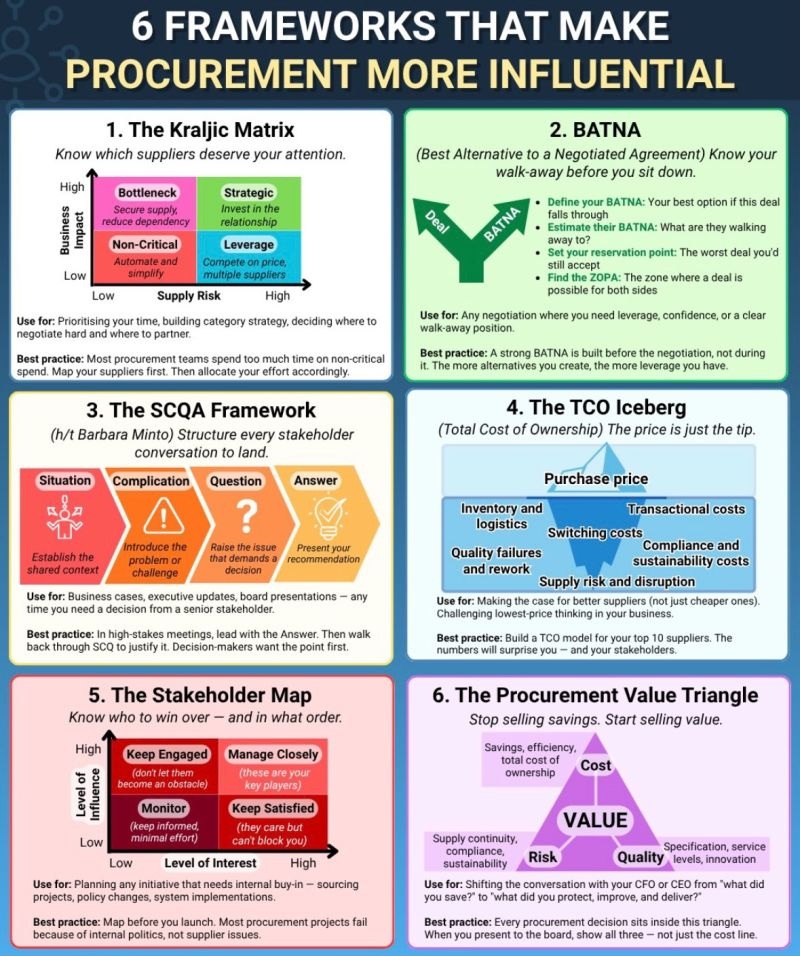
1/ Kraljic Matrix
Not all suppliers deserve equal attention.
Focus your time where the risk and impact are highest.
Strategy starts with prioritisation.
2/ BATNA
The strongest negotiator isn’t the best talker.
It’s the one with the best alternative.
Know your walk-away position before the meeting starts.
3/ SCQA
Most procurement recommendations fail because they’re poorly communicated.
→ Situation
→ Complication
→ Question
→ Answer
Structure creates clarity.
4/ TCO Iceberg
Price is what you pay.
Cost is what you live with.
The smartest procurement decisions happen below the surface.
5/ Stakeholder Mapping
Projects rarely fail because of suppliers.
They fail because of people.
Know who to engage, who to influence, and in what order.
6/ The Procurement Value Triangle
Stop selling savings.
Start selling value.
The best procurement leaders balance cost, quality, and risk.
Not one at the expense of the others.
When you understand these frameworks:
You make better decisions.
You communicate with more confidence.
You become more influential.
Because strategic procurement isn’t about knowing more tools.
It’s about knowing when to use them.
♻️ Repost to help another procurement professional level up.
Tom Mills




Leave feedback about this