

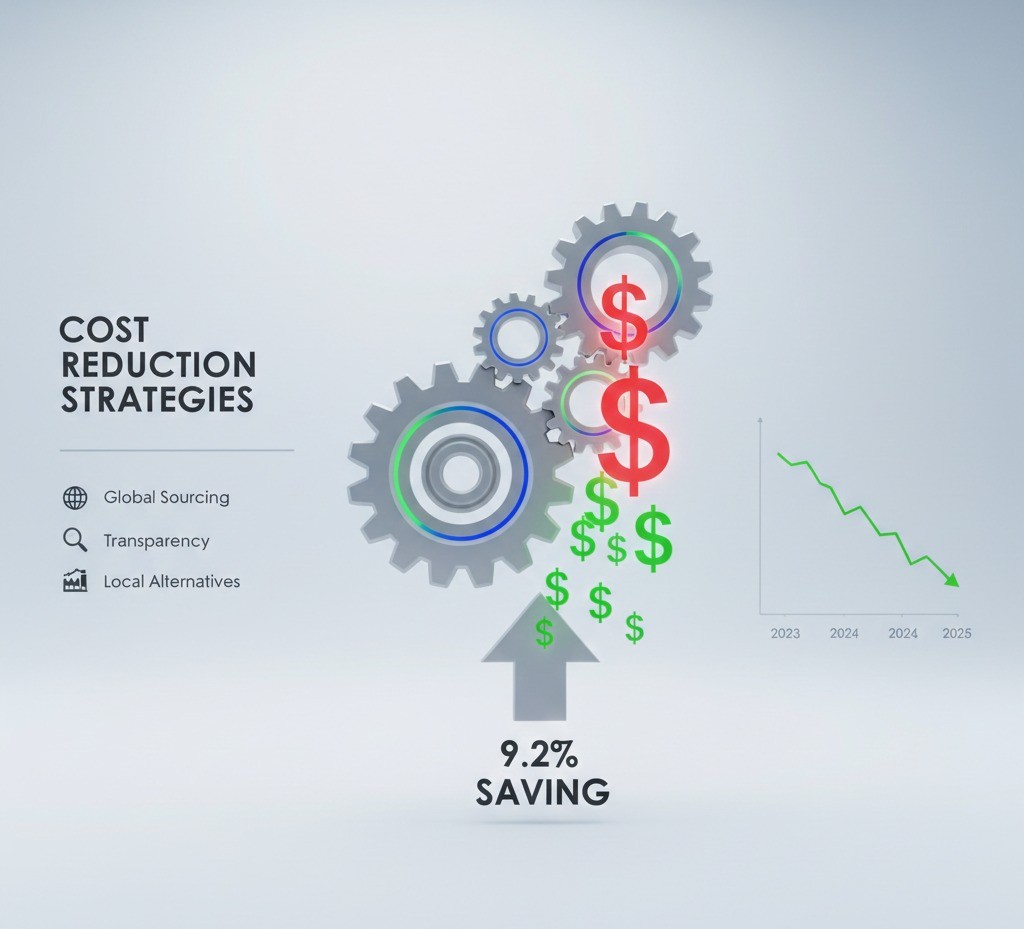
Cost Reduction Tools in Procurement: Lessons from a 9.2% Saving in 2025
In industries heavily dependent on imported raw materials, procurement is no longer just about securing supply—it has become a key driver of cost optimization, profitability, and competitive advantage.
During 2025, through a combination of strategic sourcing tools and tactical decisions, we achieved a total cost saving of 9.2%. Here’s how we approached it, and the lessons learned that can benefit procurement leaders globally.
1. Changing Incoterms: From CIF to FOB
One of the most impactful levers was switching contracts from CIF (Cost, Insurance & Freight) to FOB (Free On Board).
- CIF: Freight and logistics were controlled by suppliers with limited transparency.
- FOB: Procurement took control of shipping, enabling:
- Competitive freight negotiations with multiple carriers
- Clear visibility of freight costs
- Better schedule and inventory planning
Impact: Direct reduction in logistics costs and more accurate landed cost calculations.
2. Developing Local Alternatives
We systematically replaced imported materials with qualified local alternatives, including:
- Recycled fiber instead of imported virgin fiber
- Locally produced masterbatch
- Selected processing additives and auxiliaries
Benefits:
- Reduced exposure to currency volatility
- Shorter lead times and lower inventory holding costs
- More flexibility in production planning
Local sourcing became a core procurement strategy, not just a backup.
3. Supplier Cost Transparency
Instead of negotiating only on final price, procurement teams requested:
- Full cost breakdowns of raw materials
- Benchmarking against international and local market prices
- Data-driven challenges to unjustified price increases
Impact: Negotiations became fact-based, strengthening supplier relationships while protecting margins.
4. Multi-Sourcing and Competitive Benchmarking
Reducing dependency on single suppliers was critical:
- Qualified multiple international suppliers
- Ran parallel sourcing for critical materials
- Benchmarked prices across regions
Impact: Created healthy competition, minimized supply risk, and supported better commercial terms.
5. Cross-Functional Alignment
Cost-saving initiatives succeeded through collaboration with:
- Production: Trial approvals and material optimization
- Quality: Validating performance of alternatives
- Finance: Verifying landed cost and savings
Result: Savings were real, measurable, and sustainable, not theoretical.
6. Total Cost of Ownership (TCO) Mindset
Procurement decisions were based on total cost, not unit price:
- Material cost
- Freight and duties
- Inventory and lead-time impact
- Quality risks and downtime potential
Outcome: Avoided “cheap purchase, expensive operation” scenarios.
7. Expanding the Supplier Base to Strengthen Negotiation Power
We actively expanded our supplier base, both internationally and locally:
- Scouted and qualified alternative vendors
- Maintained competitive tension without harming long-term partnerships
Impact:
- Reduced dependency on dominant suppliers
- Improved leverage in negotiations
- Enabled price benchmarking across multiple sources
- Strengthened negotiation power as a strategic advantage
Key Takeaways
- Cost reduction is systematic, not a one-time negotiation.
- Incoterm strategy (CIF → FOB) unlocks hidden logistics savings.
- Local sourcing, when properly qualified, mitigates risk and reduces costs.
- Supplier cost transparency and benchmarking strengthen negotiation outcomes.
- Expanding the supplier base creates options before you need them, enabling procurement to negotiate from a position of strength.
- Collaboration across production, quality, and finance ensures savings are real and sustainable.
- Total Cost of Ownership (TCO) mindset prevents short-term “cheap” purchases from driving long-term losses.
Final Thought
Achieving 9.2% procurement savings in 2025 was not the result of aggressive price pressure alone. It was the outcome of:
- Strategic Incoterm management (CIF → FOB)
- Local sourcing substitution
- Supplier cost transparency
- Expanding the supplier base to strengthen negotiation leverage
Procurement leaders who actively control cost, risk, and flexibility will define their company’s competitive edge in today’s volatile global environment.
Bassem Amin
Foreign Procurement Manager | EFCO | OW Group




Leave feedback about this