

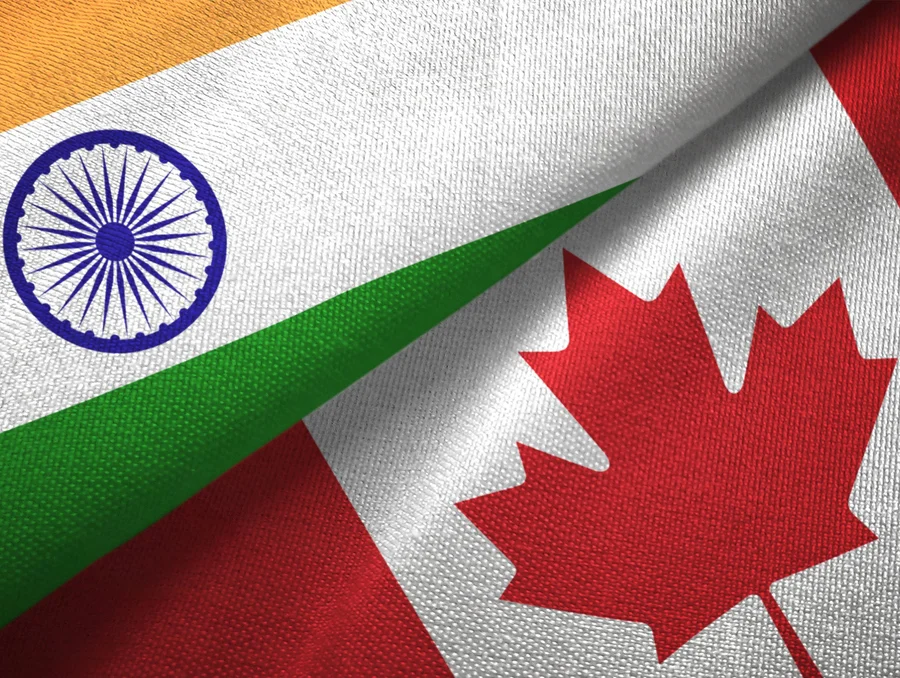
Prime Minister Mark Carney has secured a strategic energy partnership with India, focusing on nuclear fuel, critical minerals and renewable technology
Canada and India have agreed on a wide-ranging strategic energy partnership, anchored by a C$2.6bn uranium supply agreement and new cooperation across renewables, hydrogen and critical minerals.
The deal was secured during Prime Minister Mark Carney’s visit to Mumbai and New Delhi, the first bilateral visit to India by a Canadian Prime Minister since 2018. It marks a reset in relations after several years of diplomatic strain and comes as both countries seek to diversify trade and strengthen energy security.
India’s energy demand is rising faster than any other major economy. With a population of 1.4 billion and rapid industrialisation, the country is scaling up nuclear, renewable and alternative fuels capacity to meet surging consumption while reducing emissions and import dependence.
Nuclear energy at the core
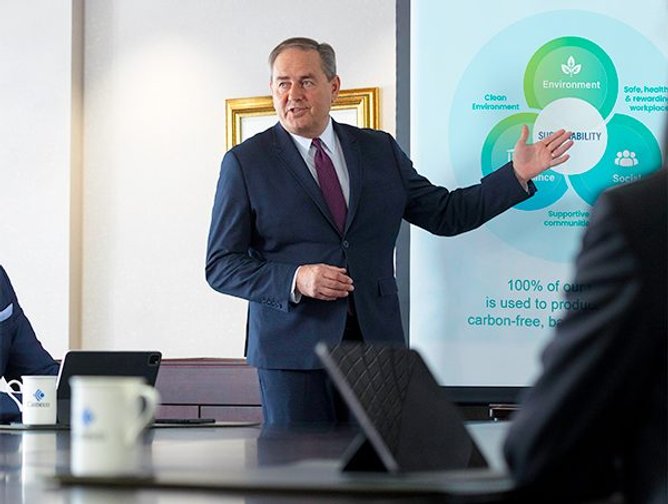
At the centre of the agreement is a long-term uranium supply contract between Saskatoon-based Cameco and India’s Department of Atomic Energy. Under the C$2.6bn deal, Cameco will supply nearly 22 million pounds of uranium to India between 2027 and 2035, supporting fuel requirements for the country’s expanding nuclear fleet.
Cameco’s CEO Tim Gitzel said: “Cameco is proud to be a strategic partner with India to help meet its civil nuclear fuel needs and support its trade relationship with Canada.
“India is embarking on an ambitious nuclear expansion to power its development plans and meet the future energy security needs of its people. That isn’t possible without a stable supply of uranium fuel.”
Tim added: “Importantly, this demand underscores an emerging trend of sovereign buyers locking up large volumes from multiple suppliers, and in a window where demand continues to grow and available supplies continue to become more uncertain and constrained.
“As a proven and reliable producer, Cameco is globally recognised as a nuclear fuel supplier of choice, and we are pleased to be a trusted provider for India once again.”
Strategic collaboration
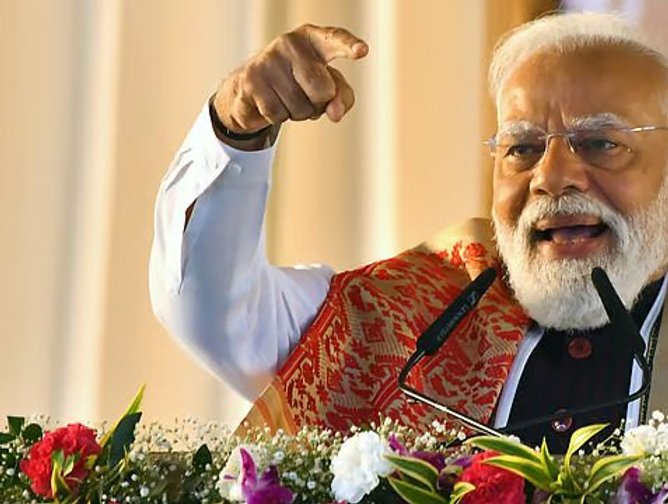
Indian Prime Minister Narendra Modi highlighted the scale of the agreement following talks in Delhi while speaking to reporters.
“In civil nuclear energy, we have reached a landmark deal for long-term uranium supply. We will also work together on small modular reactors and advanced reactors,” Narendra said.
The reference to small modular reactors and advanced reactor technologies signals a broader ambition to collaborate beyond fuel supply, potentially spanning next-generation nuclear design and deployment.
Narendra presented the two countries as “natural partners in technology and innovation” and emphasised a bilateral agreement to enhance co-operation in supercomputing, AI and semiconductors, as well as to jointly host a renewable energy summit.
Supply chain resilience
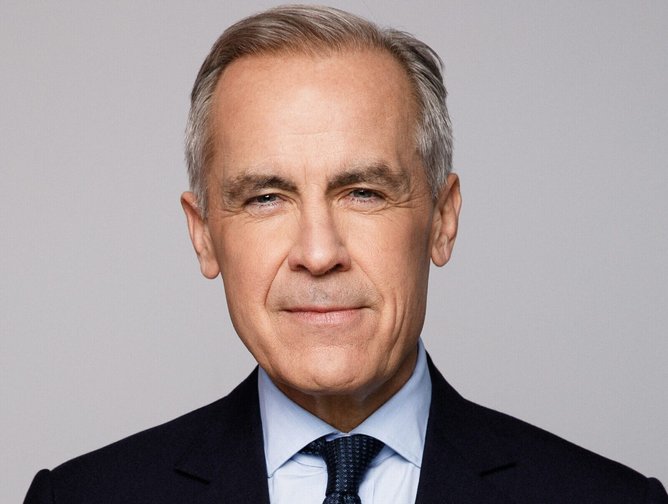
Prime Minister Mark Carney positioned Canada as a reliable long-term supplier of nuclear fuel to support India’s clean energy transition and energy security. The uranium contract forms part of a newly launched Strategic Energy Partnership covering LNG, LPG, uranium, solar and hydrogen.
Mark framed the broader reset as part of a strategic shift in a volatile global environment.
“India is the fastest-growing major economy and a powerhouse of global commerce and technology. In a rapidly changing world, Canada and India are transforming their economies to be more diversified, more independent, and more resilient,” he said.
“Our strategic partnership, and the speed at which we are working to unleash its potential in energy, talent, and AI, is the result of two confident, ambitious nations who want to build the future, together.”
Energy cooperation extends to critical minerals, a sector central to both countries’ industrial strategies. India’s Ministry of Mines and Canada’s Department of Natural Resources signed an MoU on critical minerals value chains, covering exploration, mining, processing, investment promotion and technical exchange.
These arrangements are designed to diversify supply chains and secure materials essential for renewable energy systems, batteries and advanced manufacturing.
“Our strategic partnership, and the speed at which we are working to unleash its potential in energy, talent, and AI, is the result of two confident, ambitious nations who want to build the future, together.”
Energy cooperation extends to critical minerals, a sector central to both countries’ industrial strategies. India’s Ministry of Mines and Canada’s Department of Natural Resources signed an MoU on critical minerals value chains, covering exploration, mining, processing, investment promotion and technical exchange.
These arrangements are designed to diversify supply chains and secure materials essential for renewable energy systems, batteries and advanced manufacturing.
Procurement Magazine


Leave feedback about this