


The IEA mobilises 400 million barrels of oil in historic move to stabilise global markets as Middle East conflict disrupts supply chains
The International Energy Agency (IEA) has mobilised an emergency release of 400 million barrels of oil from the strategic reserves of its member countries.
This move represents the largest such action in the organisation’s 52-year history and reflects the scale of disruption that the unfolding war in the Middle East is causing within global supply chains.
The decision, taken unanimously by IEA member countries, comes in response to what the agency has described as the largest supply disruption in the history of the global oil market.
Procurement leaders and energy buyers are currently facing significant uncertainty as logistics through critical chokepoints face restriction.
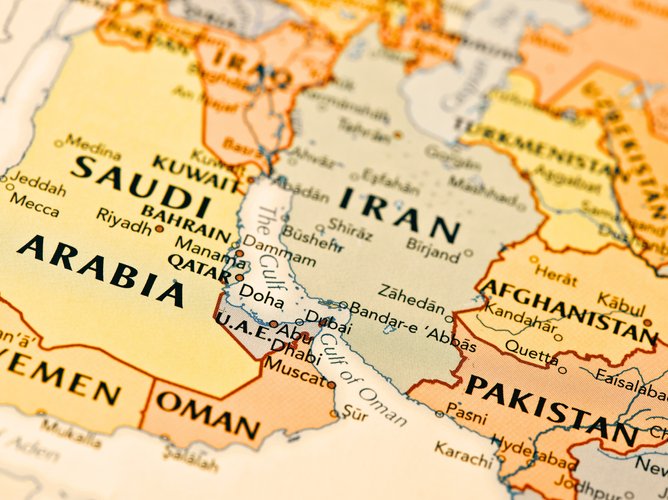
Since the conflict began on 28 February 2025, the flow of oil through the Strait of Hormuz has been reduced to little more than a trickle. Under ordinary circumstances, nearly 20 million barrels per day pass through this narrow waterway.
However, insurers are currently refusing to cover shipping in the region, creating a trade impasse with consequences that have been swift and severe.
Reductions in gulf production
Gulf producers have curtailed total oil output by at least 10 million barrels a day. The IEA estimates that crude production alone is being cut by at least eight million barrels, alongside a further two million of condensates and liquefied natural gas (LNG).
These reductions could signal prolonged tightness in the market for raw materials and energy inputs. So far, major reductions have been recorded in Iraq, Qatar, Kuwait, the UAE and Saudi Arabia.
The damage extends beyond upstream production. More than three million barrels per day of refining capacity in the region has already shut due to attacks or safety concerns.
A further four million is considered at risk as product storage tanks fill up with nowhere to send exports. In 2025, producers in the Gulf exported roughly 3.3 million barrels of refined oil a day.
They also exported 1.5 million barrels per day of liquefied petroleum gas (LPG). Since the conflict began, the flow of these fuels has now been almost entirely severed.
Diesel and jet fuel markets are considered particularly exposed, given limited flexibility in other regions to increase output at short notice.
Volatility in global markets
Oil prices have gyrated wildly in the weeks since hostilities began, presenting cost management challenges for C-suite executives monitoring operating expenses.
Brent futures briefly traded close to USD 120 per barrel before easing back. At the time of the IEA’s March report, the benchmark stood at around US$92, which remains US$20 above its pre-conflict level.
This price surge, combined with the suspension of flights across major Middle Eastern airports and collapsing LPG supplies, has begun to erode demand more broadly.
The IEA has cut its forecast for global oil demand growth in 2026 by 210,000 barrels per day to 640,000 barrels per day, with the sharpest reductions concentrated in March and April.
The release of the IEA’s reserves is already underway. Member countries in Asia-Oceania are moving immediately, while those in the Americas and Europe are beginning to make stocks available from the end of March.
Of the total of 400 million barrels, 271.7 million will come from government stocks while a further 116.6 million barrels will come from obligated industry stocks.
On top of that, 23.6 million barrels will be released through other measures which are predominantly from the Americas.
This marks only the sixth time in the IEA’s history that member countries have taken emergency collective action, following previous interventions in 1991, 2005, 2011 and twice in 2022.
Limitations and outlook
For all its scale, the IEA has been candid about the limitations of the intervention regarding long-term supply assurance.
“This emergency collective action, by far the largest ever, provides a significant and welcome buffer,” the agency says.
“But the most important factor in ensuring a return to stable flows is the resumption of regular transit of shipping through the Strait of Hormuz.”
Global observed oil stocks stood at 8,210 million barrels in January 2025. This was their highest level since February 2021 and provides some headroom.
However, analysts warn that without restored shipping flows, even the largest reserve release in history amounts to little more than a temporary patch for the procurement landscape.
“Adequate insurance mechanisms and physical protection for shipping are key to the resumption of flows,” the IEA noted.
This points to the structural problem that no amount of stored oil can resolve while tankers remain unable or unwilling to transit the world’s most critical oil chokepoint.
Procurement Magazine


Leave feedback about this